Basement Water Damage Restoration in Wilmington that gets your lower level dry
When a burst pipe, sump pump failure, or heavy rain sends water into your lower level, Basement Water Damage Restoration in Wilmington from Wilmington AquaRestore stops the damage fast. We serve homeowners and property managers across New Castle County with emergency basement water damage restoration Wilmington DE, pulling standing water, drying structural cavities, and repairing what the flood ruined. The longer water sits, the deeper it wicks into drywall and framing, so call while the floor is still wet.
Every basement job includes the core work: emergency response, water extraction, structural drying, moisture monitoring, and basic repairs. Here is what is standard on a Wilmington AquaRestore basement job.
Emergency water extraction
Truck-mounted extraction units and submersible pumps pull standing water from your basement floor, corners, and floor drains. We start the moment we arrive, because every hour of standing water means deeper wicking into drywall, framing, and flooring.
Moisture mapping and inspection
We use moisture meters, thermal imaging cameras, and a boroscope camera to find water behind finished walls and under flooring. You get a plain-English map of what is wet, what is dry, and what has to come out before we can dry the structure.
Structural drying setup
Air movers and dehumidifiers are placed to create a drying vortex across walls and floors. We check readings daily with a hygrometer and adjust equipment placement. A finished basement usually takes three to five days to hit dry standard.
Mold prevention and remediation
If mold growth has already started, we remediate under IICRC AMRT protocols with containment and HEPA filtration. If it has not, we treat surfaces with antimicrobial and dry fast enough that it never gets a foothold. Either way, you know where you stand.
Repairs and reconstruction
Once the structure is dry, we replace water-damaged drywall, baseboard, trim, paint, and flooring. One crew handles the whole job, so you are not coordinating between a drying company and a separate contractor. The basement goes back to how it looked before the flood.
Insurance documentation
We photograph affected materials, log daily moisture readings, and document the cause of loss. Your adjuster gets a complete file with dates, equipment logs, and readings. That documentation is often what gets a basement water damage claim approved without a fight.
Homes and businesses.
The approach is the same for a home and a business. What changes is the access, the schedule and who needs the paperwork.
For homeowners
We handle flooded basements in rowhouses, twins, and single-family homes across Wilmington. You get a walkthrough, a drying plan, and daily readings until the space is dry.
Sump pump failed overnight
Burst pipe soaked the floor
Sewage backed up after a storm
For property managers
We work with landlords and property managers on basement floods in commercial and mixed-use buildings. Scheduling works around tenants, and every loss gets documented for the owner's insurer.
Tenant reports a flooded unit
Storm backup in a stockroom
Water heater failed in a common area
Basement Water Damage Restoration in Wilmington
A plain-language look at what Basement Water Damage Restoration involves and when it is needed.
Basement Water Damage Restoration in Wilmington is the process of removing standing water, drying structural materials, and repairing everything a leak, flood, or backup ruined in your lower level. It is not a shop vac and a fan. We use moisture meters and thermal imaging cameras to map water you cannot see behind finished walls, then run water extraction units and Dri-Eaz air movers until framing, drywall, and flooring hit dry standard. Only then do we repair, so mold does not come back in three weeks.
Wilmington basements take on water for predictable reasons. The city's older rowhouses and twin homes in neighborhoods like Forty Acres and Trinity Vicinity still have original cast iron drains and clay sewer laterals that crack and root-infiltrate. Add a nor'easter or a summer downpour, and groundwater intrusion pushes through the cove joint. We handle basement flood restoration Wilmington Delaware for both the storm-driven floods and the slow plumbing leak that soaks a carpet over a weekend.
Find the source, dry the structure to a documented standard, then repair what the water ruined.
What it is
Removing water, drying structural materials, and repairing a flooded or leaking basement.
When you need it
Any time standing water, a wet carpet, or a musty smell shows up in your basement.
What to expect
Extraction the same day, three to five days of drying, then repairs and a final moisture report.
What our restoration process looks like
Every basement job follows the same five steps, from the first phone call to the final walkthrough. Here is exactly what happens and roughly how long each stage takes.
Emergency call
You call (302) 775-0748 and describe what you see: standing water, a wet carpet, a sewage smell, or a sump pit that stopped running. We ask about the source, the square footage, and whether the basement is finished. Within minutes we tell you what to shut off and what to leave alone, then dispatch a crew.
Source check
Shutoff advice
Crew dispatched
Inspection and mapping
On arrival we walk the space with a moisture meter and thermal imaging camera. We check the water heater, sump pump, and any visible plumbing. A boroscope camera goes into wall cavities where we suspect hidden water. You get a plain-English explanation of what is wet and what it will take to dry it.
Moisture mapped
Thermal scan
Findings explained
Water extraction
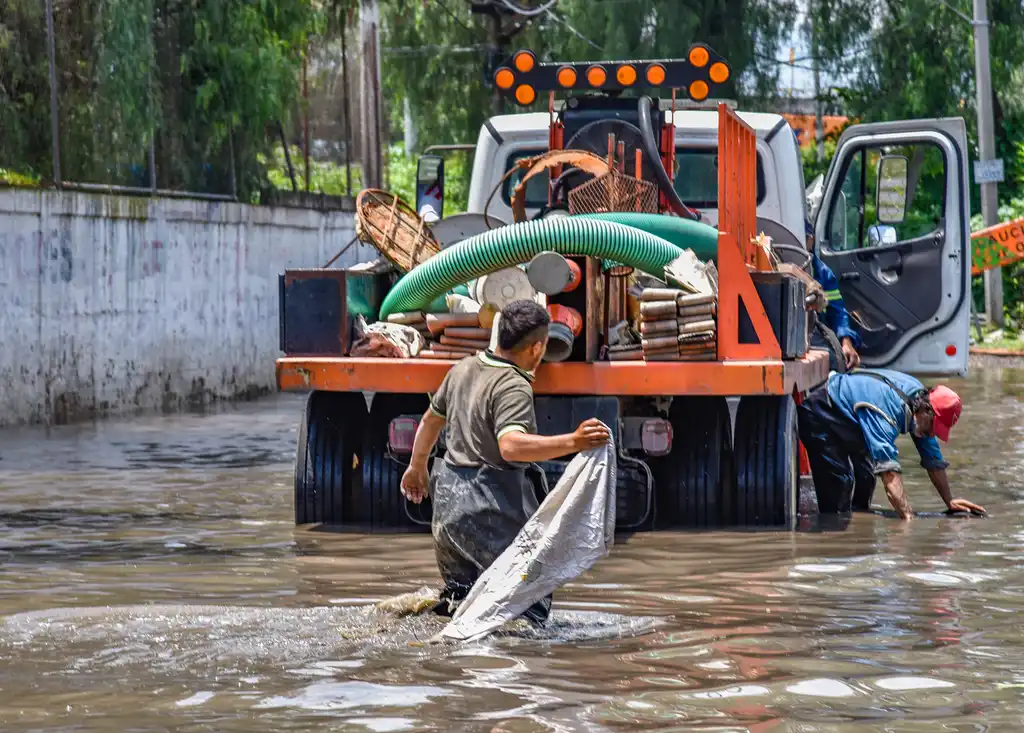
We start pulling water immediately. Truck-mounted extraction units handle the bulk, and a wet/dry vacuum or submersible pump gets the last inch out of corners and floor drains.
Water pumped
Corners cleared
Source isolated
Structural drying
Air movers and dehumidifiers run continuously, usually for three to five days on a finished basement. We place them to create a drying vortex across walls and floors, then check readings daily with a hygrometer. You get a text each morning with the numbers so you know we are making progress.
Air movers set
Dehumidifiers running
Readings logged
Repair and handoff
Once materials hit dry standard, we repair what the water ruined: drywall, baseboard, paint, flooring, and trim. If mold growth started, we remediate it under IICRC AMRT protocols. Final walkthrough includes a moisture report and a maintenance plan so the next storm does not put you back on the phone with us.
Drywall repaired
Floors restored
Report handed over
Tools and methods we use
Move across a circle, or focus it and press Enter, for an illustrative thermal view of the photograph.
Moisture meter
Reads moisture content in drywall, framing, and flooring. Anything above 16 percent on drywall means it has to come out. We take readings daily to track drying progress.
Thermal imaging camera
Shows temperature differences that reveal hidden water behind finished walls and under flooring. It is how we find a slow leak that has been running for weeks without showing on the surface.
Boroscope camera
A flexible camera that goes inside wall cavities and under floors. We use it to confirm whether the back of a wall is wet before we decide to cut it open.
Dri-Eaz air movers and dehumidifiers
The workhorses of structural drying. Air movers create a vortex across wet surfaces while dehumidifiers pull moisture out of the air. We place them based on meter readings, not guesswork.
Truck-mounted water extraction unit
Pulls hundreds of gallons an hour from a flooded basement. It is the fastest way to drop the water level and the single most important step in preventing mold growth.
Thermal views are illustrative, generated from the photographs.
Methods
Hygrometer
Reads relative humidity in the air and inside materials. We use it alongside the moisture meter to confirm the structure has hit dry standard before we close the job.
Wet/dry vacuum and submersible pump
For the last inch of water in corners, floor drains, and sump pits. The wet/dry vacuum handles small volumes, and the submersible pump moves larger volumes from a flooded pit.
IICRC WRT drying protocol
We follow the IICRC Water Restoration Technician standard for extraction, drying, and monitoring. That means documented readings, defined dry standards, and a process that holds up if your insurance company asks questions about how the job was run.
Thermal imaging and moisture mapping
Before we cut anything open, we map the moisture with a thermal camera and meter. That map drives the drying setup and tells us exactly which materials can be saved and which have to be replaced.
Category-based water classification
We classify the water as Category 1, 2, or 3 before we start. Clean water from a supply line is handled differently than sewage backup. The category determines what we can dry in place and what has to be removed.
Daily moisture monitoring
We check readings every day and adjust equipment placement based on the numbers. You get a text each morning with the current readings, so you know the job is moving in the right direction and not just running equipment for the sake of it.
When to call for basement restoration
Storm flood
A nor'easter dumps three inches of rain and your sump pump cannot keep up.
We respond with pumps and extraction units, pull the water, and set up drying equipment. We check the cove joint and floor drain for groundwater intrusion and document the storm event for your insurance claim.
Outcome: Your basement is dry in three to five days, and you have a documented claim file that answers the adjuster's questions before they are asked.
Burst pipe
You come home to find a burst pipe spraying water across your finished basement.
Then we extract, dry the drywall and framing, and replace whatever the water ruined.
Outcome: One crew handles the pipe, the water, and the repairs. Your basement looks the way it did before the pipe split.
Sewage backup
A sewage backup sends contaminated water across the basement floor.
We treat it as Category 3, suit up, contain the area, and remove everything the sewage touched. Then we disinfect, dry, and document the loss for your insurance company.
Outcome: The contamination is gone, the basement is dry, and the space is safe to use again. No lingering smell, no hidden mold.
Pre-purchase check
You are buying a Wilmington rowhouse and the inspection flags moisture in the basement.
We run a full moisture inspection with thermal imaging and a boroscope camera. We check the sump pump, water heater, and wall cavities, then give you a written report on what is wet and what it will take to fix.
Outcome: You know exactly what you are buying and what the repair will cost before you sign. No surprises after closing.
Commercial flood
Your commercial basement or stockroom floods and you need it back in service fast.
We schedule around your business hours, extract and dry the space, and document everything for your property manager and insurer. Larger jobs get additional equipment to shorten the drying window.
Outcome: The space is dry and back in service quickly, with a documented loss file that supports your claim.
Forty AcresTrolley SquareDowntown Wilmington
How basement restoration runs in Wilmington
Wilmington basements fail in specific ways. The city's housing stock is old, and much of it sits on stone or brick foundations with original clay sewer laterals. When a nor'easter hits in October or a January thaw splits a frozen pipe, we see the same calls repeat across neighborhoods. In Forty Acres and Trinity Vicinity, the cove joint is often the entry point for groundwater intrusion.
In Downtown and along the Riverfront, commercial basements flood when the combined sewer system backs up during heavy rain. We handle both. Our crews know the ZIP codes, the building types, and the plumbing. If you need emergency basement water damage restoration Wilmington DE, we are already in the area.
We also handle 24 hour basement water damage restoration Wilmington Delaware calls, because floods do not wait for business hours.
Forty Acres: Older rowhouses with stone foundations and original clay laterals. Groundwater intrusion at the cove joint is common after heavy rain.
Trolley Square: Renovated basements with finished drywall and flooring. Slow plumbing leaks behind walls are the most common call we get here.
Downtown Wilmington: Commercial and mixed-use basements that flood when the combined sewer backs up during storms. After-hours response matters here.
Brandywine Village: Historic homes with brick foundations and limited drainage. Sump pump failures during nor'easters are a recurring problem.
Elsmere Manor: Poured concrete basements with newer sump systems. When those pumps fail, the water comes in fast and the finished space floods quickly.
Combined sewer system in older parts of the city: Heavy rain can overwhelm the system and push sewage back through floor drains. That turns a clean water flood into a Category 3 cleanup, which changes the scope and the materials we can save.
Check readings, adjust equipment, and outline next steps
From problem to finished result.
IllustrativeThe thermal view is generated from the photograph. It is not a measurement. Drag the handle, or use the arrow keys once it is focused.
Sump pump failure in Forty Acres
Before: A sump pump died during an October nor'easter and four inches of water covered a finished basement floor. Carpet, padding, and the bottom two feet of drywall were soaked. The homeowner called at 11 p.m.
After: We extracted the water that night, set up air movers and dehumidifiers, and dried the structure in four days. The drywall was saved. Carpet and padding were replaced. Final moisture readings were all under 12 percent.
We installed a high-water alarm and recommended a backup pump. The homeowner now tests the primary pump every spring before storm season.
Burst pipe in Trolley Square
Before: A copper supply line split during a January freeze and sprayed water across a finished basement for several hours before the homeowner got home. Drywall, insulation, and hardwood flooring were all wet.
After: The hardwood was saved with rapid drying. Drywall was cut and replaced.
We insulated the exposed pipe run and added heat tape. The homeowner now shuts off the supply and drains the line before leaving for winter vacations.
Sewage backup in Downtown Wilmington
Before: A commercial basement flooded with sewage after a storm overwhelmed the combined sewer. Contaminated water covered the floor and soaked stored inventory and the bottom of the drywall.
After: We treated it as Category 3, removed contaminated materials, disinfected, and dried the space in five days. The basement was back in service the following week with new drywall and a clean floor.
We recommended a backwater valve on the floor drain and annual camera inspection of the lateral. The property manager now schedules both every fall.
Basement water problems we solve in Wilmington
Most Wilmington basement floods come from one of a handful of sources. We have seen them all, and we know how to stop each one before it becomes a mold problem.
Sump pump failureSump pump fails during a stormThe pit fills, water spills over the rim, and your finished basement floods within an hour. If the water sits overnight, drywall wicks it up the wall and mold starts within 48 hours. We extract the standing water, dry the structure, and help you size a replacement pump correctly for your basement's inflow rate. A backup pump and a high-water alarm are cheap insurance against the next storm.
Sewer backupCracked clay sewer lateral backs upSewage backs up through the floor drain, turning your basement into a Category 3 hazard. Anything it touches has to be treated as contaminated, and the smell lingers for weeks if it is not handled properly. We treat it as Category 3, suit up in full PPE, remove contaminated materials, disinfect, and dry.
Groundwater seepageGroundwater pushes through the cove jointWater seeps up where the floor meets the wall, soaking carpet and baseboard slowly. It looks minor until you pull the carpet and find black mold on the bottom plate and framing. We extract, dry the slab and walls, and check the cove joint with a moisture meter. Then we recommend the right fix: interior drainage, a sump pump liner, or exterior grading correction.
Burst pipeBurst or frozen pipe soaks the basementA split copper pipe can dump hundreds of gallons before you notice. By the time you hear the water, it has already soaked insulation, drywall, and anything stored on the floor. We also point out the exposed runs that need pipe insulation before the next cold snap.
Water heater leakWater heater leaks slowly for weeksA failing tank drips quietly behind the unit, rusting the base and feeding mold in the wall cavity behind it. You smell it before you see it, and by then the damage is done. We pull the unit, extract the water, dry the surrounding area, and check behind the wall with a boroscope camera. If mold has started, we remediate it before the new heater goes in.
Why homeowners call us first
A dry basement, repaired properly, with the paperwork your insurer needs.
Fast water removal
We arrive with truck-mounted water extraction units and portable pumps that pull hundreds of gallons an hour. A finished basement with two inches of water is usually dry to the touch in one day, not three. That speed is the difference between saving your drywall and replacing it.
Hidden moisture found
Standing water is the easy part. We use a boroscope camera to look inside wall cavities and a hygrometer to read relative humidity in the air and materials. If your drywall reads above 16 percent moisture content, it comes out. That is how we stop mold growth before it starts.
Repairs done right
We are not just a drying crew. We replace water-damaged drywall, re-set baseboard, repair PEX piping and copper pipe, and reinstall flooring. One team handles the whole basement water damage repair Wilmington DE job, so you are not chasing three contractors for one flood.
Insurance paperwork handled
We photograph every affected wall, log moisture readings, and document the cause, whether it was sump pump failure or a water heater leak. Your adjuster gets a clean file with dates, readings, and equipment logs. That documentation is often the difference between a covered claim and a denied one.
What a written scope covers.
What a written scope covers and what shapes it. Prices are set by the business after the first look.
Our sump pump died during a storm and we had four inches of water in a finished basement. Wilmington AquaRestore had a crew out the same night. They pumped it out, set up air movers and dehumidifiers, and checked moisture readings every morning for four days. They saved the drywall and the carpet. The insurance paperwork they handed over was cleaner than anything I could have put together.
A pinhole leak behind the finished wall in our basement had been running for who knows how long. They found it with a thermal camera in about twenty minutes. Cut out the wet drywall, dried the framing, replaced the pipe, and patched everything back. You cannot tell anyone was here. Worth every penny.
We manage six rowhouses and a sewage backup hit one of them on a Friday night. They handled the Category 3 cleanup, removed the contaminated drywall, disinfected, and dried the whole basement. Tenants were back in the unit in five days. They documented everything for the owner's insurance claim without me having to chase them.
Questions we hear on the phone
A small unfinished basement with a clean water leak might land near the low end. A finished basement with sewage backup and ruined drywall pushes toward the top. We give you a written scope before work starts.
The usual suspects are a failing sump pump, a cracked clay sewer lateral, groundwater pushing through the cove joint, or a slow plumbing leak behind a finished wall. In older Wilmington rowhouses, cast iron drains and original foundation waterproofing are often the root cause. We inspect all four on the first visit and tell you which one is yours.
Extraction takes a few hours. Structural drying runs three to five days for a finished basement and two to three days for an unfinished one. Repairs after drying add another two to seven days depending on drywall and flooring. A straightforward job is usually wrapped in about a week from the first call.
Yes, in most cases. If the drywall reads under 16 percent moisture content and the water was clean, we can often dry it in place and save it. Category 2 or 3 water, or drywall that has been wet for days, usually means cutting out the bottom 12 to 24 inches. We make that call with meter readings, not guesswork.
Call now for Basement Water Damage Restoration in Wilmington
Standing water in your basement gets worse every hour. Call (302) 775-0748 and we will tell you what to shut off, what to move, and when we will be there.
Call (302) 775-0748 any time, day or night. If you prefer email, send photos and details to info@wilmingtonaquarestore.com and we will follow up with next steps.